

The 2026 Super Bowl halftime: What's to remember
- Feb 10
- 3 min read
Updated: Feb 11
Every Super Bowl delivers the same promise: bigger budgets, bigger celebrities and bigger expectations. With brands paying millions for seconds of airtime, the annual race for broadcast reach has become as competitive as the game itself. But the campaigns that truly stand out aren’t just entertaining; they reveal cultural shifts, exceptional brand strategy and mark where the year ahead in clever marketing is headed.
Here are the campaigns that cut through the noise and why they matter from a PR and earned-first perspective.
AI goes mainstream
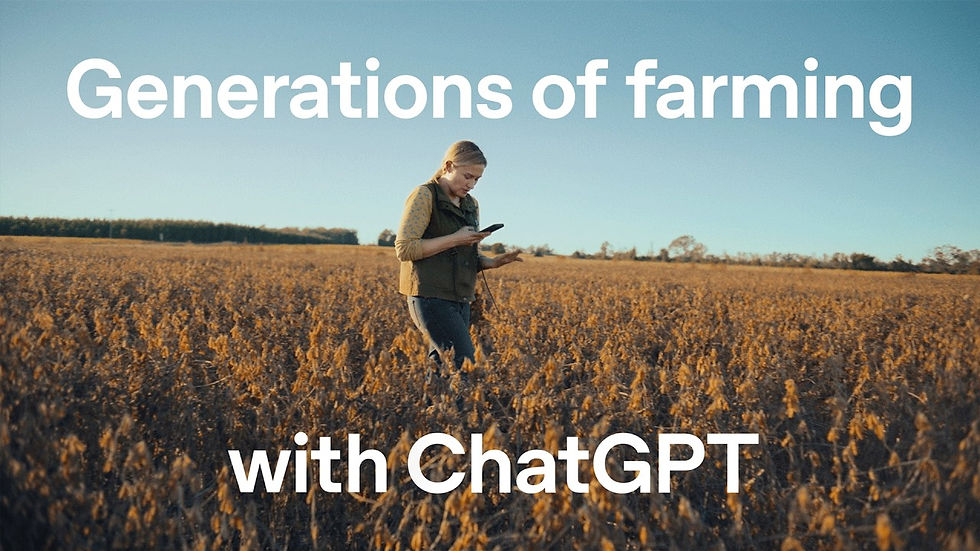
It was widely anticipated that Anthropic was ready to make its big move. However, Sam Altman who was overt in his rebuttal and OpenAI countered with warm, earnest storytelling about everyday usefulness and human impact. It was clear and compelling.
Bundy vs Pepsi: The perfect brand hijack
Bundy inserted itself into Pepsi’s big-game commercial with “leaked CCTV footage” showing the real results of the Pepsi Challenge — courtesy of Bundy R. Bear. Rather than inventing something new, Bundy remixed decades of shared cultural memory: Pepsi’s polar bear and the iconic taste test.

Cultural hijacking is powerful when it’s playful, not hostile. Remixing shared memory creates instant relevance and nostalgia for fans.
Pokémon turns fandom into a global engine
The Pokémon Company kicked off its 30th anniversary celebration with a star-studded Super Bowl commercial featuring Lady Gaga, Trevor Noah, F1 driver Charles Leclerc and more who all shared their favorite Pokémon.
The year-long campaign titled "What's Your Favorite?" will also include fan-focused events to connect new fans and those who grew up with the brand's cards, cartoons and games since 1996.
Leveraging authentic fandom and celebrity personality to deepen emotional engagement beyond a traditional product plug , each star revealed a favourite Pokémon, making it sharable content rather than just a TVC.
Fans share their own favourites, creating UGC (user-generated content) loops worldwide, particularly relevant in markets passionate about Pokémon like ANZ.
Pringles builds the “Perfect Man” for Sabrina Carpenter
Sabrina Carpenter builds the 'Perfect Man' out of Pringles in her first ever Super Bowl Ad.
The surreal, funny character-driven storyline was clearly designed for TikTok and Instagram virality, turning a passive TV spot into a shareable cultural moment. Crucially, casting a Gen Z star helps Pringles tap into the rapidly growing female NFL audience sparked by the Taylor Swift effect.
Levi’s: Earned-First brand storytelling
Levi’s returned to the Super Bowl after 20 years with their campaign, “Behind Every Original”
Instead of a traditional product demo, the ad leaned into the brand’s truth, heritage and cultural impact, using a playful motif of backsides in denim to celebrate self-expression, confidence and the diverse ways people wear Levi’s.
This is a strong example of earned-first thinking: one simple, provocative idea and naturally built for cultural conversation, not just broadcast reach. It shows how brands can use celebrities as cultural signals, not the main event.
Bad Bunny’s Halftime Show: A cultural milestone
Bad Bunny made history as the first Latino artist to headline the halftime show performing almost entirely in Spanish. The multi-Grammy award winning artist was joined by Lady Gaga and Ricky Martin, with other celebrity cameos throughout his iconic performance from Cardi B, Pedro Pascal, Jessica Alba, Alix Earle, and Karol G.
The halftime set was more than a musical moment, it became a symbolic cultural touchpoint at a time of heightened national conversation around identity, language, and inclusion. The performance ended with a football reading: “Together We Are America.”
Cultural significance:
Bad Bunny’s halftime set was more than a musical moment — it became a symbolic cultural touchpoint at a time of heightened national conversation around identity, language, and inclusion:
Performing almost entirely in Spanish on the NFL’s biggest platform challenged long-standing norms about what constitutes “mainstream American entertainment.
For many U.S. Latinos and Puerto Ricans — especially after moments of political tension and debates over immigration and cultural identity — seeing Spanish and Latin culture celebrated on such a stage was deeply meaningful.
Bad Bunny focused on unity and joy rather than overt politics, intentionally using moments like waving flags of countries across the Americas and ending with a message on a football saying “Together We Are America".
This was read by many as a call for inclusivity, at a time when discussions around immigration, diversity, and national identity are particularly charged.


